
When you are caring for someone who is at the end of their journey here, it can feel a little strange to think, “I wonder when they are going to die?” This is a normal question. Wanting to understand what is happening does not mean you want them gone.
Sometimes you are wondering whether to call family, whether you can leave the room, or how much longer the person you love will have to go through this.
“Actively dying” describes the final phase of life, often hours or days. It is not an exact timetable. These signs make sense in the context of a known terminal illness and an assessment by the care team; a checklist cannot confirm that someone is dying.
Before someone is actively dying, it is important to talk with them about what they want. It can be a difficult conversation, so offer an opening and let them set the pace.
“Do you want music playing?”
“Who would you like to be here?”
“Is there anyone you would rather not have visit?”
“Would you like prayer, a blessing, or someone from your faith or community to come?”
There may be days when they do not want to talk about it, and that is okay. Leave the conversation open. There may also be days when they have a lot to say. Offer pen and paper if writing is comfortable, or ask whether they would like you to write their wishes down. Share care and treatment preferences with their hospice nurse or clinician.
Their vigil—the time spent keeping company as death approaches—can be as unique as they are. Their comfort and wishes matter more than creating a perfect scene.
You can prepare the lighting, sounds, and familiar belongings they requested before active dying begins. Keep scents mild or leave them out if they cause discomfort, and use battery-operated candles. Make room for quiet, privacy, and changes of mind. A vigil does not have to be a crowded room.
Every death is unique. Not everyone will show all of these signs, and they may appear in a different order.
Breathing changes can be especially noticeable and frightening to watch. Ask the hospice nurse to explain what you are seeing and how to recognize discomfort.
Changes you may notice
Cheyne-Stokes
Breaths may gradually deepen, then become shallower, followed by a pause before breathing resumes.
The pause is called apnea. Its length varies.
You do not need to time each cycle. Report new changes or distress to the nurse; this pattern alone cannot tell you exactly how much time remains.
Vital Signs
Blood pressure and oxygen levels may fall as circulation changes.
There is no single blood-pressure or oxygen reading that proves death is imminent. Ask whether checking these numbers will help guide comfort care; do not use them as a countdown.
Eyes
Their eyes may remain partly open or seem unfocused. Ask the nurse about dryness or irritation.
Mouth
The mouth may stay open and become dry. Ask the nurse to demonstrate gentle mouth care with appropriate supplies. Moisten the mouth and lips with small amounts of water; do not pour or squirt water into the mouth of someone who cannot swallow. Stop if care causes coughing or distress.
Swallowing
As swallowing and coughing weaken, saliva and secretions may collect and cause wet, rattling breathing, sometimes called the “death rattle.” The sound alone does not mean the person is choking or in pain. Ask the nurse about gentle repositioning or treatment if needed.
Hands and Feet
Hands and feet may feel cool and develop patchy coloring, called mottling. Offer a light blanket if comfortable; avoid heating pads or electric blankets.
Coloring
Lips or fingertips may look bluish or purplish, and the face may look paler. Changes may be less obvious on darker skin. Ask the care team about changes you notice.
More sleep, less food, and less urine
They may sleep more, respond less, and lose interest in food or drink. Offer small amounts only if they want them and can swallow safely. Do not force food or fluids. Urine may become darker and less frequent. Ask for a medication plan if swallowing becomes difficult.
Restlessness or discomfort
Confusion, picking at bedding, or trying to climb out of bed can occur. New agitation deserves a call to the nurse: pain, a full bladder, constipation, or medicines may contribute. Grimacing, a tense body, or labored breathing also warrant assessment. Do not assume suffering is something they must simply endure.
Caring Together
Being with the person you love
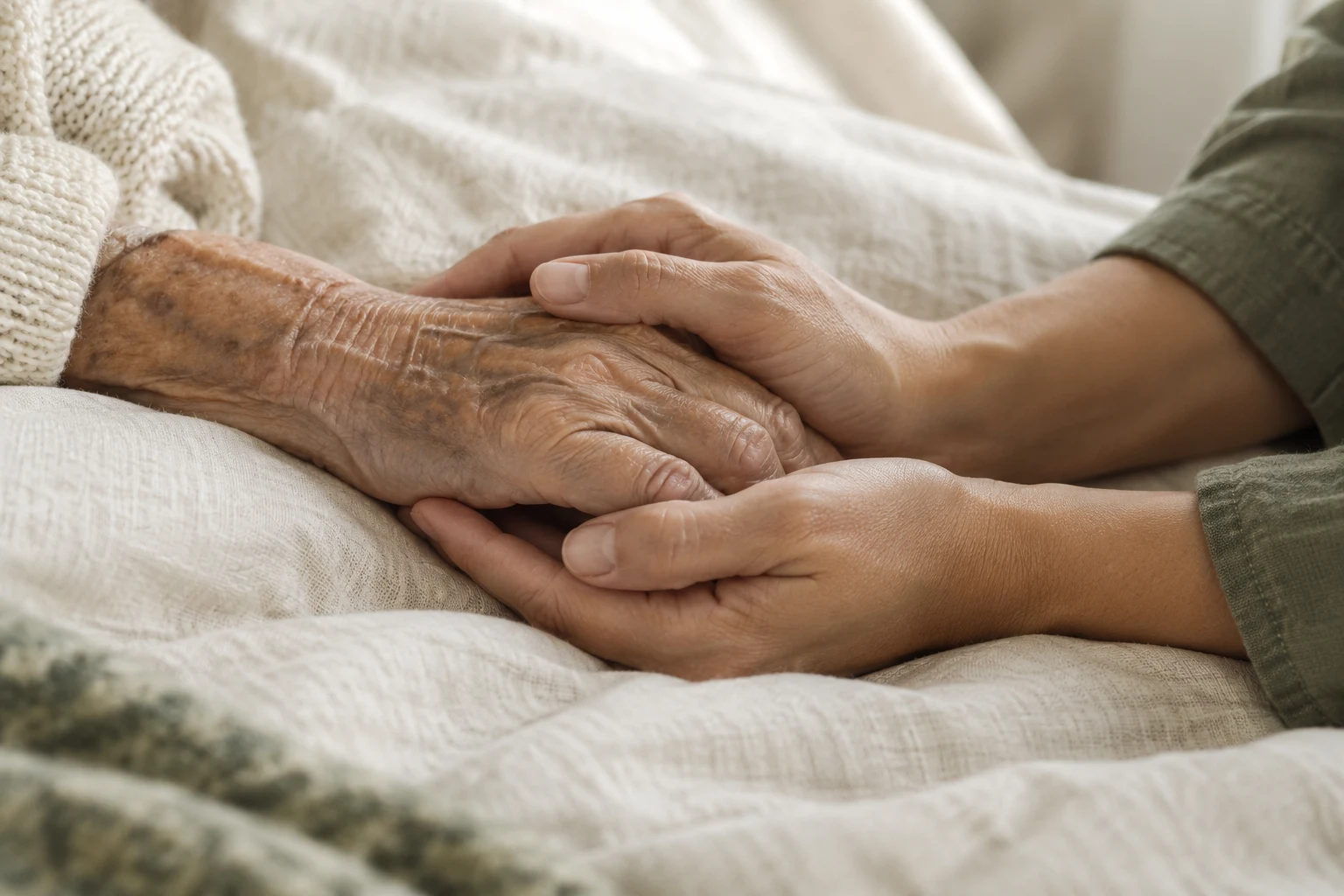
Keep talking to the person you love, even when they cannot answer. They may still hear you. Say who is there and explain before touching or moving them. Hold their hand if that is welcome. You can share something familiar, sit quietly, or say, “I’m here. I love you.”
You do not have to fill every silence. They are still the person you love.
Words of reassurance
Some families find comfort in saying, “You can rest. We love you, and we will take care of each other.” If that feels right for your relationship, you can say it.
But permission is not something every dying person needs, and there are no required words. You are not responsible for controlling the timing of their death. If you are not ready to say “It’s okay to go,” you can simply say, “I love you.”
If they die while you are asleep or out of the room, that does not erase the care you gave. You do not have to be present for the final breath to have been present in their life.
When to call for help
Call the hospice nurse for new or worsening symptoms, trouble giving prescribed medicines, or uncertainty about what you are seeing. Follow the written care plan and use medicines only as directed. You can call because you are frightened, too.
For an expected death under hospice care, follow the hospice’s instructions about whom to call. If someone unexpectedly becomes unresponsive or stops breathing and there is no established end-of-life emergency plan, call 911.
After death: let someone help with their body
We do not recommend that families take on washing, dressing, or preparing their loved one’s body without trained help, especially alone. This can be physically demanding and emotionally overwhelming. Moving and turning a body safely may require more than one person; please do not try to lift or move them by yourself.
For an expected death at home under hospice care, call hospice first and follow their guidance. Hospice staff can be a wonderful source of support and may help with care of the body. Ask ahead of time what hands-on assistance your hospice provides. Your chosen funeral home can arrange for staff to come and bring your loved one into their care, and can handle washing, dressing, and preparation.
If participating is meaningful to you or part of your cultural or religious traditions, tell hospice and the funeral director so they can help you plan supported involvement. You can also choose to leave all of this care to them.
You have already cared for the person you love. You do not have to do this last physical task to prove it. It is okay to sit beside them, say goodbye, and let someone else take over.
Caring Together · After death
Protecting this sacred time
Time with your loved one after death can be sacred and deeply personal. It deserves to be protected from unnecessary rushing and from the feeling that there is another list of chores to finish.
Washing and preparing the body can mean seeing pressure sores, dealing with bodily waste, or encountering smells that feel overwhelming when it is someone you love. Not every family will encounter these things, but they can leave painful memories. You are allowed to leave that care to trained hands and choose how you want to spend this time.
The primary caregiver, in particular, needs room to stop. They may have spent days, months, or years imagining how this day would happen. They have given so much of themselves to keeping someone comfortable, answering each need, and getting through the next hour.
Now that daily responsibility has ended, they may not know what to do with themselves. They may feel relieved, lost, confused, abandoned, lonely, or scared. They may feel several things at once. Relief does not mean they loved the person any less.
If they want to stay beside their loved one’s body, help make space for that. Ask hospice or the funeral director what time can be arranged before transfer. Let someone else handle the calls and practical details where possible. Ask before bringing people into the room or beginning another task.
A death doula can offer steady, practical support through this uncertainty. By learning the person’s and family’s wishes beforehand, a doula can help coordinate the vigil, explain available choices, and work alongside hospice and the funeral director to honor cultural and spiritual traditions. Having someone guide the practical details can give families more room to be together and say goodbye.
They may want to cry, talk, pray, hold a hand, or sit in silence. There may finally be room to let out what they have been holding in and holding back. There is no need to prompt them to speak, to cry, or to let go before they are ready. Some people feel numb; some prefer to leave the room. Their choice deserves the same care.
For the people supporting the caregiver, a simple question can help: “Would you like some time alone with them, or would you like me to stay?”
Give them room to be the person who loves them, without another task to perform.
Do Today
1. Put the hospice’s day-and-night number somewhere everyone can find it. Ask what to do if symptoms are not relieved and whom to call when death occurs.
2. Ask the person one small question about what would make them comfortable. If they cannot answer, use what you already know about them.
3. Ask the nurse to show you one practical task, such as mouth care or repositioning. You do not have to learn everything at once.
4. Arrange a short break with someone who can stay, if possible. Eat something, use the bathroom, or rest. Keeping vigil should not mean ignoring your own basic needs.
Knowing the signs can help you feel less lost. You can ask for help with the medical care and keep being their daughter, son, partner, friend, or whatever you have always been to each other.
Sources and further reading
National Cancer Institute: Last Days of Life—Patient Version
National Cancer Institute: Last Days of Life—Health Professional Version
For practical family support, call MAKA at 385-640-1211.